
This text aims to offer a reflection following an art exhibition in Bogotá about the Silk Road. It therefore discusses journeys and the exchange of goods that trace back to the amazing and dazzling expeditions undertaken by Marco Polo in 1271 from Venice to China. However, this millennia-old route existed long before Marco Polo’s journey. It was named after silk, which was highly coveted and expensive, and it consisted of a network of paths and cultural-commercial exchanges between Asia and Europe.
So much so that the beauty described in his Book of Marvels inspired Christopher Columbus to sail the seas in search of the island of Cipango, today known as Japan, whose intricate route led him to discover the American continent.
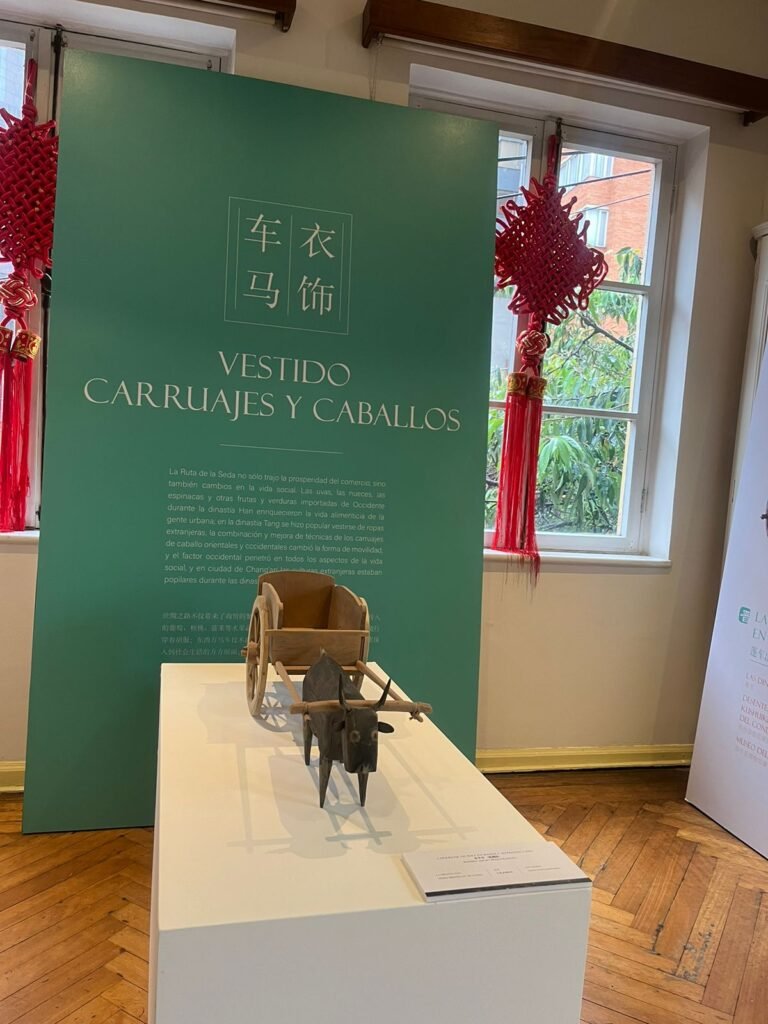
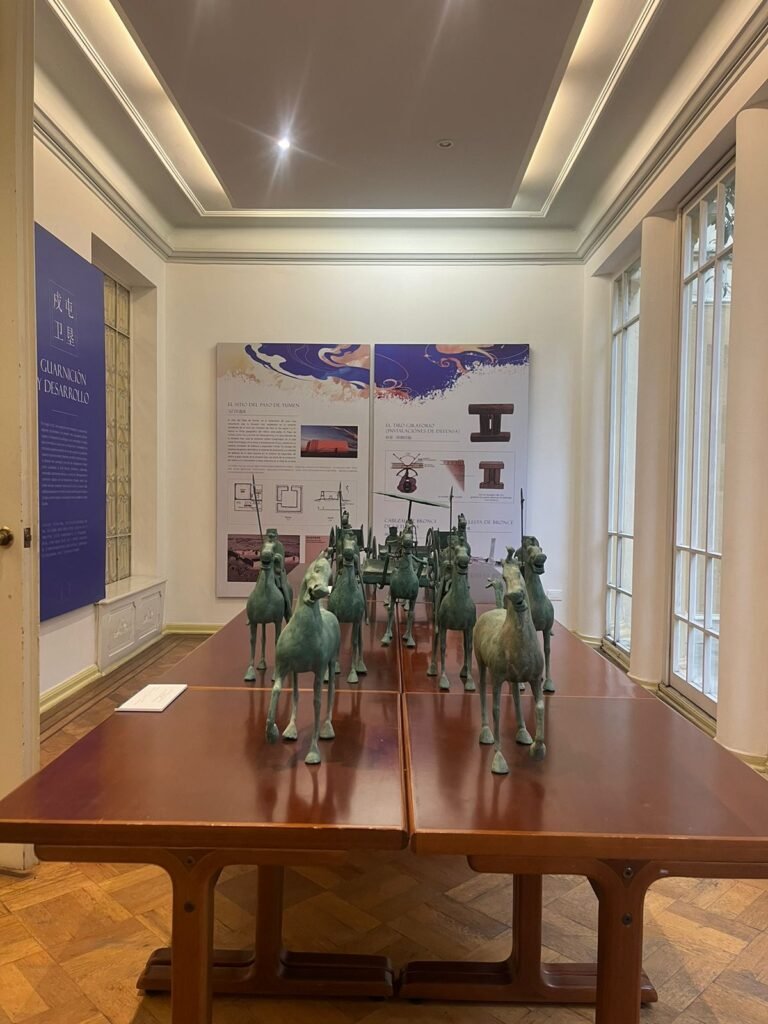
With this introduction, we want to tell you about the recent exhibition in the city of Bogotá titled “The Time of Horses and Carriages.” Developed by Jorge Tadeo Lozano University at the Casa Lleras Museum Library, this exhibition is a cultural showcase brought by the Embassy of the People’s Republic of China, featuring pieces from the Gansu Provincial Museum. It invites visitors to explore the material and symbolic richness of one of the most influential trade routes in human history.
This route, which dates back to very ancient times, consisted of a land and maritime corridor through which silk, spices, tea, porcelain, precious stones, perfumes, and paper circulated. Ideas and religions such as Buddhism, Islam, and Christianity, as well as technologies, were also spread. Its significance lies in being a key driver of cultural and economic exchange between East and West, as well as facilitating the early globalization of knowledge and trade.
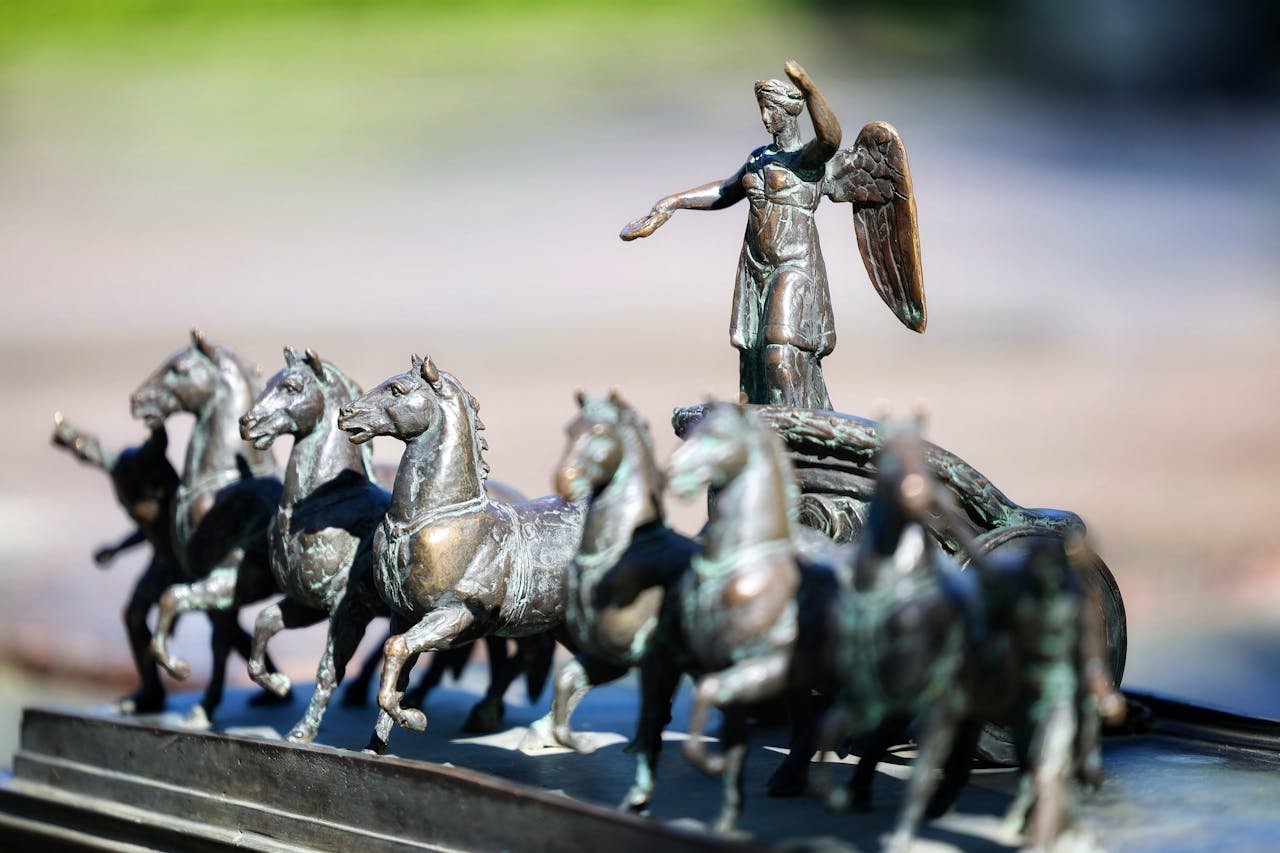
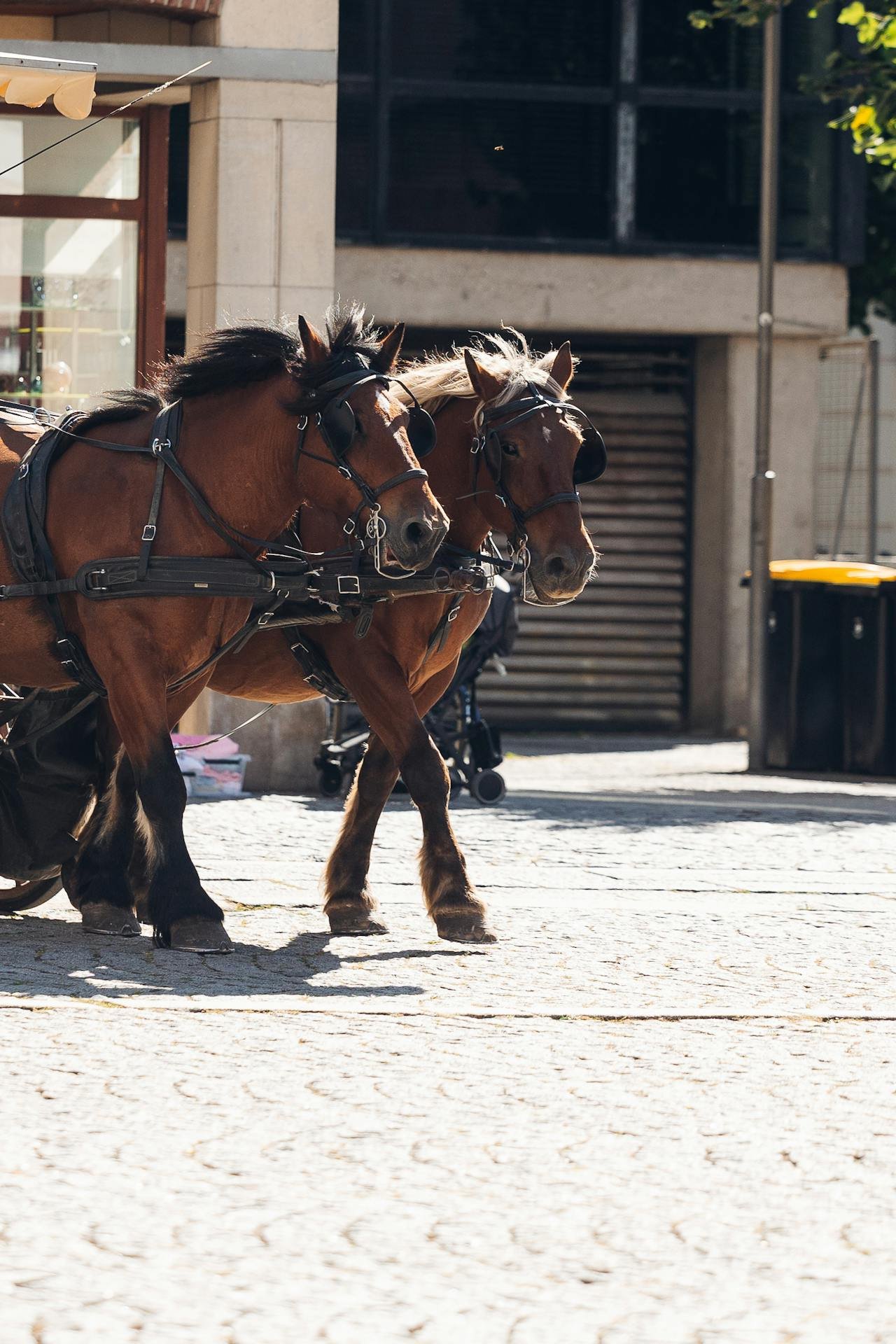
At the exhibition, visitors can view sculptures alluding to Chinese culture, as well as the modes of transportation from that early route—horses and carriages, along with figures representing agricultural life and daily activities.
However, the exhibition goes beyond physical elements; it serves as a point of reflection on the close relationship between the West and the East. According to the curatorial text, cultural ties between China and the West date back to very ancient times. By the end of the 2nd century B.C., Zhang Qian, an envoy of the Western Han Dynasty, promoted the opening of the famous Silk Road by exploring the western regions. This event marked the beginning of a new phase of contact between East and West. The established trade network connected China with India, Persia, Greece, Rome, Egypt, and other ancient civilizations of East Asia, becoming a vital channel for cultural exchange among the peoples of Europe, Asia, and Africa.
Thus, the art exhibition at the Bogotá museum invites reflection on current times and how the Silk Road has a second chapter, so to speak. Launched in 2013 by China, this initiative aims to recreate the ancient trade routes through modern infrastructure.
To date, more than 140 countries have signed cooperation agreements with China. As a result, significant investments in infrastructure have been made, including railways, ports, airports, industrial parks, and power grids, thereby strengthening the economic and logistical ties between the participating regions.
You may also be interested in: Memories of the Peru Forum on May 13.
Thus, modern times bring different modes of transportation that meet current demands. This new Silk Road connects the continents in a faster and more efficient way. Its corridors are land, sea, and air. Goods or cargo are now transported in hundreds of containers on massive ships and in airplanes, shortening distances and transit times.
The initiative, as this new route has been called, has led to a reduction in logistics costs thanks to improvements in transportation infrastructure. Likewise, China has invested in Latin America with advanced infrastructure, such as the Chancay port project in Peru.
Join our virtual forum: Is the technological revolution transforming marine insurance?
It seems the sentence is incomplete. Do you want me to continue translating once you provide the rest?
Finally, the integration of global supply chains has been promoted through the development of more efficient logistics corridors. This improvement not only shortens transit times but also optimizes cargo traceability, reducing the frequency of claims and enabling better management of transport insurance through more accurate and secure premiums.
We are left with the question: What economic transformations will the new Silk Road bring, along with cultural, social, and political changes?