The name of the game is Risk.
- Blog
- Andrew Cave
- Cave Adjusters
- 01/04/2025
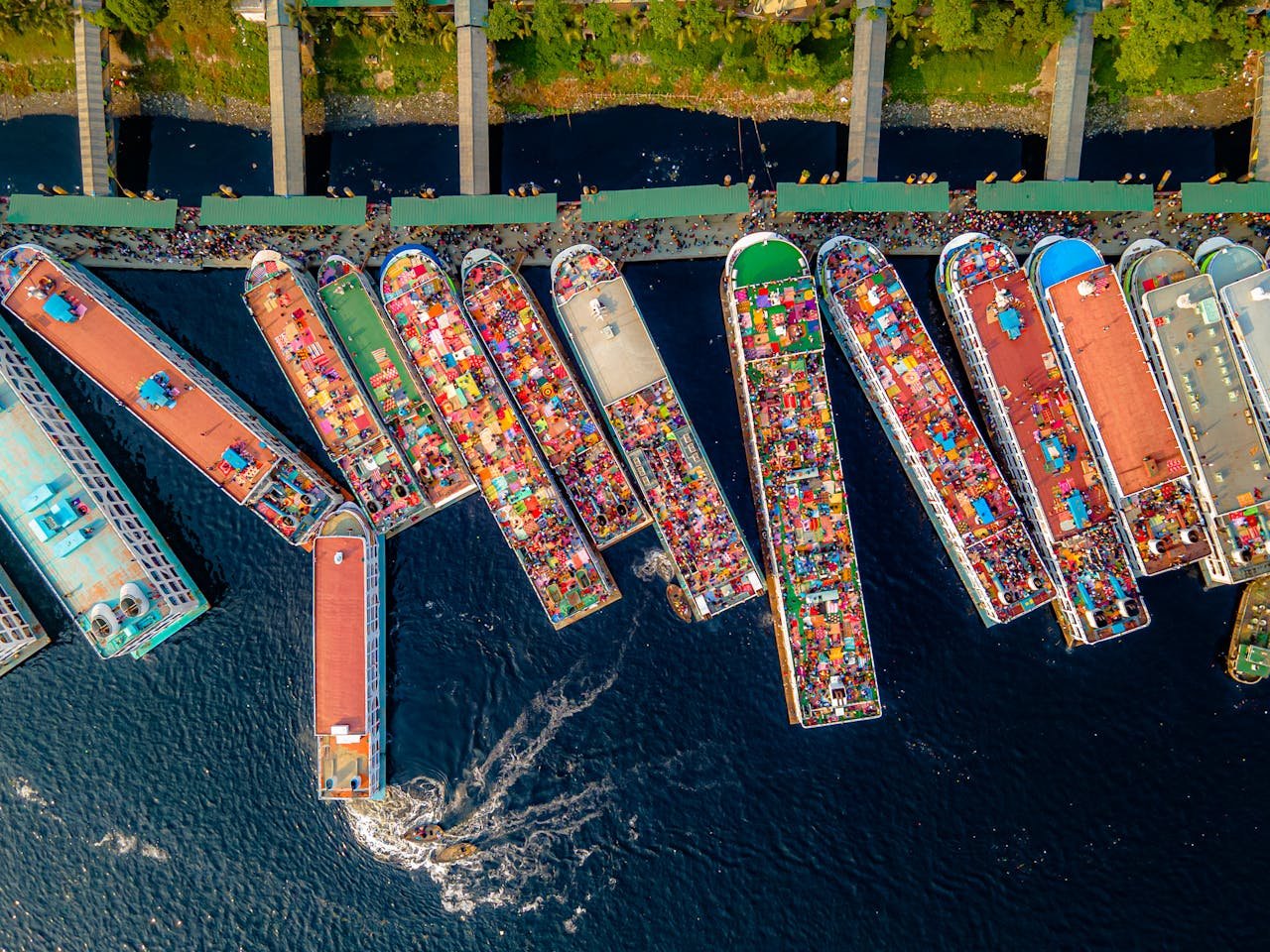

Risk is the possibility of an undesired event that causes material or immaterial losses. In the maritime industry, these risks include physical damage and civil liabilities. Insurance allows the transfer of the economic consequences of losses, ensuring asset protection.
What is risk?
Risk is a word known by everyone, experienced by many, and studied by some. Although there are many definitions of risk, the one I like most is the one that says risk is an event, likely to occur, that causes some harm, and is therefore undesirable. Let us analyze the parts of this definition in more detail.
An event refers to the occurrence or non-occurrence of a fact, for example, a storm, a fire, or a collision. However, events can also be negative, such as when something does not happen, for instance, the failure to complete the delivery of a construction work or project, or the payment of an invoice, etc.
Of probable occurrence means that it is not a certainty. A certain event is one that has a 100% probability of occurring (that is, the only possibility is that it occurs and that it will always occur) or a 0% probability (that is, the only possibility is that it does not occur and that it will never occur). Everything that lies between these two extremes has a more or less probable occurrence, expressed as a percentage.
In other words, out of 100% of the times in which certain circumstances occur, the undesired event will only happen in a percentage of those instances. For example, if we flip a coin a sufficient number of times, the number of times it lands heads will tend to approach 50%, while the number of times it lands tails will do the same.
In the case of risks, the percentage expresses the likelihood that the undesired phenomenon will occur versus that it will not occur.
Another important point in the previous statement is that it “causes harm”; that is, it results in damage or some type of loss to the person who is exposed to the risk. For example, if I crash my car, it may be repairable, so I do not lose the car itself. However, I will incur the cost of that repair and possibly a lower resale value when I want to sell it, since it has a history of damage.
Losses caused by risks may be not only material in nature, but also intangible, such as depression, grief, or other types of emotional or psychological distress. For example, losing the opportunity to attend a one-of-a-kind musical or sporting event that will not be repeated in the future.
What types of risks does the maritime industry face?
The modern maritime industry involves large investments in infrastructure, economies of scale, and enormous dynamism. Likewise, the value of the goods transported across the world’s seas is immense.
What has remained unchanged since the origin of the industry is, without a doubt, the fact that going to sea constitutes an adventure, since, despite all the technological advances the industry enjoys today, the sea remains the same uncontrollable and, at times, unpredictable element vital to the industry.
The maritime industry mainly faces two families or categories of risk. The first refers to physical damage. This affects the assets and physical infrastructure of the various actors in the maritime transport chain.
For shipping companies, this mainly refers to the vessel itself. It may be affected by weather-related and sea-specific phenomena, such as storms and other adverse weather conditions that may be encountered during the maritime voyage.
Vessels may also suffer damage as a result of the cargo they carry—such as dangerous goods—as well as during berthing and unberthing operations, and even from collisions or allisions with fixed and floating structures, other vessels, and maritime structures such as pontoons and other underwater installations located near the coastline.
For ports and terminals, this refers to collisions of vessels with berthing facilities, or damage to cargo that is handled or stored within their premises.
The second family of risks relates to the civil liability faced by the various operators in the maritime transport chain for incidents whose effects impact third parties.
These third parties include the owners of the cargo carried by the vessels, crew members, passengers, other persons on board—such as stevedores—fuel spills and other polluting substances, other vessels or property with which they collide, wreck removal, and others.
For ports and terminals, this includes their own personnel and third parties who are within their facilities, damage to vessels they service, damage to cargo they handle or store, and even situations of marine pollution.
Finally, there are the users of the industry, namely the owners of the goods seeking to be transported to remote destinations. They may suffer loss or damage during the course of transportation, whether due to operational conditions, environmental factors, or other causes.
Practically all the situations described in the preceding paragraph are governed by legal frameworks set out in international conventions or in the domestic legislation of individual countries.
While risks in the physical damage category concern only the owner of the asset, given the scale at which the maritime industry operates—in terms of investments and the commercial interests involved—the actors and third parties affected by maritime casualties do not remain passive in the face of their occurrence, due to the effects they may suffer as a result.
The actions that may be taken against vessels, as well as ports and terminals, may be of an extrajudicial, pre-litigation, or judicial nature.
This requires timely and effective attention to such matters, which can result in significant defense costs and impact the normal operation of the vessel, port, or terminal.
And what can we do about it?
An interesting characteristic of risks is that they are observable, analyzable, understandable, and predictable.
Events known as risks are observable because they manifest in the losses they cause. This allows researchers in statistics and related disciplines to identify patterns and causal chains that lead to the occurrence of a risk materializing.
For example, we know that wood is a flammable material; therefore, we can observe that a wooden house is more likely to catch fire than a solid house made of materials such as brick or concrete.
This understanding of the mechanisms that make a risk more likely to materialize allows for the formulation of preventive measures to stop that chain or, even better, prevent it from starting in the first place.
These are the topics addressed by risk prevention, actuarial analysis, and other disciplines within this fascinating field. Additionally, there are those who focus on managing the materialization of a risk, taking or recommending measures to minimize damage and ensure the quickest possible recovery.
And what do insurance policies have to do with all of this?
An insurance contract is a financial tool that allows the insured to protect their assets in the event of a loss.
A loss is understood as the materialization of a risk. Risks that cause damage that can be quantified in monetary terms are the type of risks that insurance can cover.
So, what is an insurance contract? It is a contract between an insured and an insurer, under which the latter pays the former a compensation intended to replace in monetary terms the value of the asset lost due to a risk. This presupposes the payment of a price or premium by the insured and the agreement of certain terms and conditions.
An insurance contract is not, in itself, a magical shield that makes the insured invisible to risks. The difference between a person who has insurance and one who does not is that if both suffer the same loss, the person with insurance will be able to keep their assets practically intact. They may no longer have a house or a car, but they will have the monetary value of it, allowing them to purchase a new one. On the other hand, a person without insurance will lose their car or house and will likely not have the funds to buy a replacement.
An insurance contract is not, in itself, a magical shield that makes the insured invisible to risks. The difference between a person who has insurance and one who does not is that if both suffer the same loss, the person with insurance will be able to keep their assets practically intact. They may no longer have a house or a car, but they will have the monetary value of it, allowing them to purchase a new one. On the other hand, a person without insurance will lose their car or house and will likely not have the funds to buy a replacement.
Andrew Cave
Related
Posts

Advertising
Space
Advertising
Space